
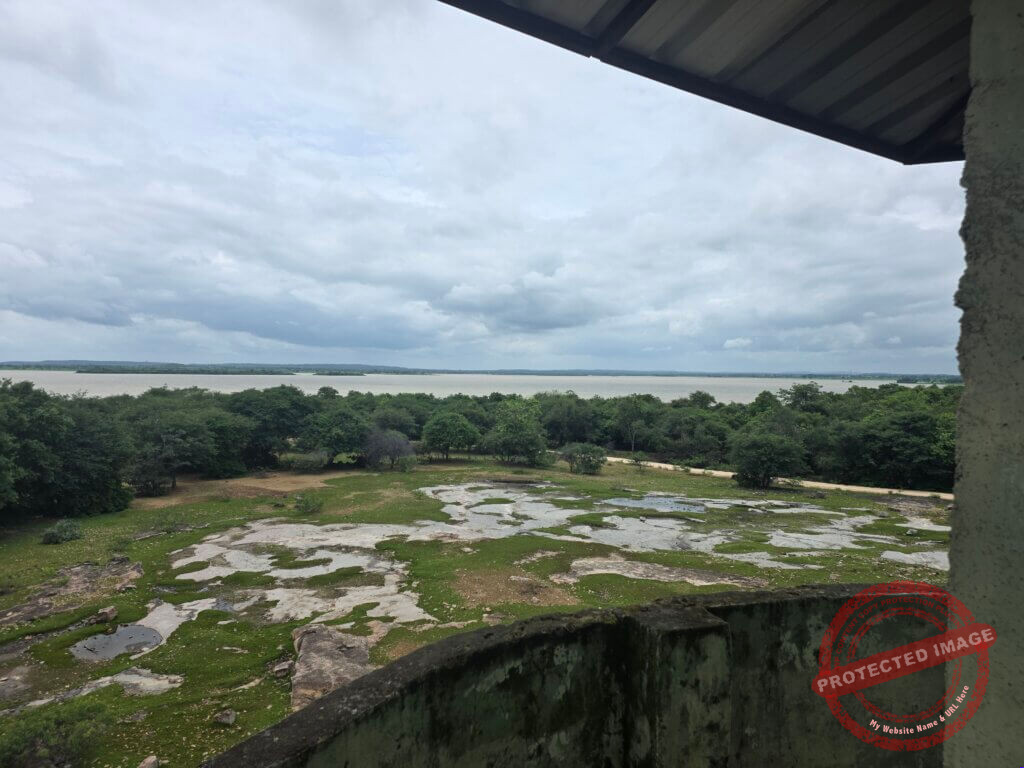
Hyderabad to Medak — a quiet Wednesday road trip in mid-August
It was a Wednesday in the middle of August, right in the middle of the monsoon, when we decided to take a road trip from Hyderabad to Medak. There was nothing particularly ambitious about the plan. We simply wanted to get out of the city, drive somewhere green, see some water, and spend a day exploring without having to follow a rigid itinerary. We left home at around 8:00 am, with the road ahead of us and the monsoon landscape already looking promising.
Breakfast at a Food Truck — 9:41 am
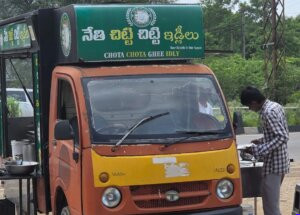
Our first stop was around 9:41 am, at a small food truck located in the premises of Runway 99 Dhaba and Restaurant at Dhomadugu. The dhaba itself was closed when we arrived, but fortunately the food truck was operating. The breakfast was actually quite good, and what I particularly liked was how convenient the stop was for a road trip. There was enough parking space for the car, a simple table stand where we could stand and eat comfortably, and even a little tea spot. The tea, unfortunately, was only average—but the breakfast and the easy parking made this a very practical stop. For anyone driving out of Hyderabad, these small roadside food stops can sometimes be much more enjoyable than searching for a large restaurant.
Skipping Narsapur Forest Urban Park
Our original plan was to visit Narsapur Forest Urban Park before heading towards Medak. But when we reached the area, something about the place felt too deserted for us. And I have to confess to one slightly irrational problem: I am scared of almost all animals. Not just snakes or wild animals. So, after a little discussion, we decided not to force ourselves into an experience we weren’t comfortable with and skipped the park. Sometimes a good road trip is also about knowing when to abandon the itinerary.
Pocharam Dam — 11:45 am
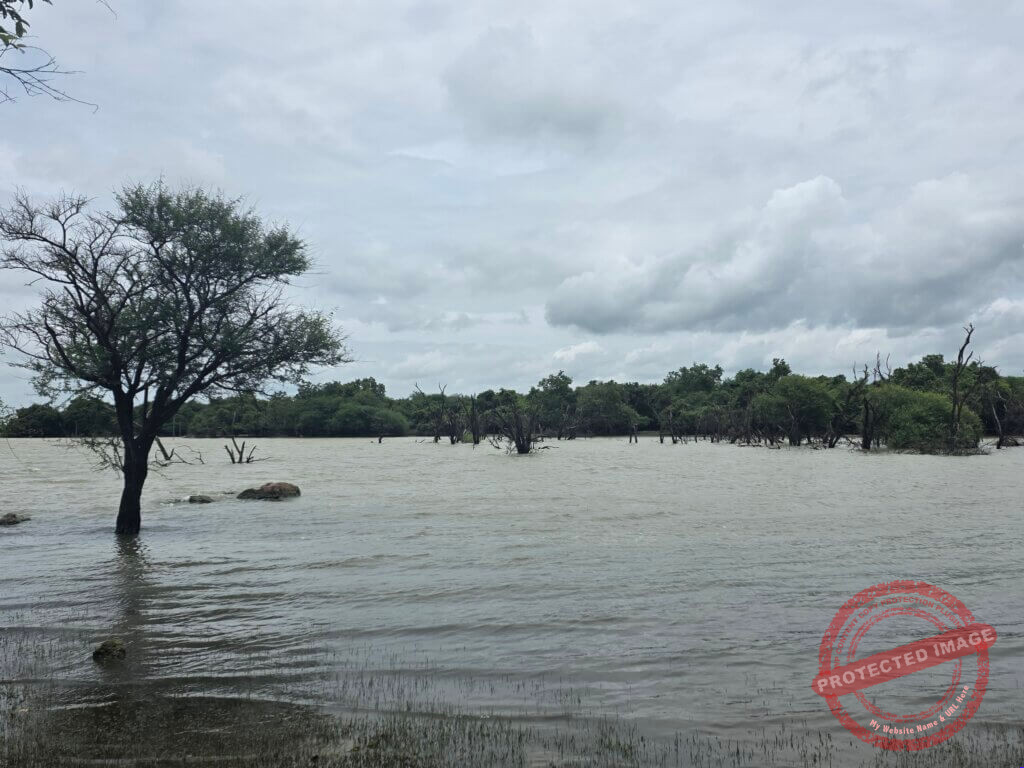
We continued towards Pocharam Dam, reaching around 11:45 am. The route suggested by Google Maps became surprisingly confusing as we got closer to the dam, so my advice is simple: once you are in the vicinity, ask the locals for directions rather than blindly following Google Maps. The dam itself is part of the historic Pocharam irrigation project, built across the Allair River between 1916 and 1922 during the Nizam’s era. The reservoir lies close to what is now the Pocharam Wildlife Sanctuary, and the entire area becomes particularly beautiful during the monsoon.
The first thing that struck me about Pocharam was the water. It was breathtaking. I have always had a weakness for landscapes with water in them. We went down the steps and watched the water flowing through the dam. It was one of those moments when you forget that you are only a couple of hours away from Hyderabad and feel completely removed from the city. We were extremely careful, as the area is not officially open to visitors and the slippery conditions around the dam can be dangerous; even a small slip can have serious consequences, and accidents resulting in fatalities have occurred here. At around 12:15 pm, the police arrived and asked everyone to leave, reinforcing the fact that this was not a place where we should have been casually exploring. We had our little adventure, enjoyed the view, took in the monsoon landscape, and left when we were asked to.
Lorem ipsum dolor sit amet, consectetur adipiscing elit. Ut elit tellus, luctus nec ullamcorper mattis, pulvinar dapibus leo.
Pocharam Safari — 12:30 pm
From the dam, we headed to the Pocharam Wildlife Sanctuary/Safari, reaching at around 12:30 pm. The sanctuary itself was remarkably quiet when we visited. Pocharam Wildlife Sanctuary covers roughly 130 square kilometres and was historically a hunting ground of the Nizam before being designated as a wildlife sanctuary. Today it protects a variety of wildlife and bird species, including deer, nilgai, chinkara, four-horned antelope and several species of water and forest birds.
One of the best things about our safari was that we could take our own car and drive through the route at our own pace. We paid ₹110 per person and entered a roughly 4-km loop through the forest. Since there were very few other visitors, there was no pressure to rush. We drove slowly, stopped whenever something caught our attention, and simply enjoyed being inside the forest. We got out of the car at only two places—the bird-watching area and the watchtower—and drove through the rest of the loop. That pace suited us perfectly.
And then came the animals. We could watch them safely from inside our car, which made the experience even more enjoyable. We spotted peacocks dancing, peahens, deer and several small reptiles. I couldn’t confidently identify the little reptiles—we thought they might have been some kind of lizard, but I’m not going to pretend to be a wildlife expert and invent a species. The peacocks were probably the highlight. Seeing them moving around freely in the forest, especially during the green monsoon season, made the whole safari worthwhile. Pocharam is also known for its birdlife, with species such as Brahminy ducks, bar-headed geese and open-billed storks recorded in the sanctuary.
Medak Cathedral — the final stop
Our final destination was Medak Cathedral, and after the dam and the forest, the change of scenery was dramatic. The cathedral is one of the most recognisable landmarks of Medak and is an impressive example of Gothic Revival architecture. Construction of the present cathedral began in 1914, during a period when the region was experiencing famine, and the building was finally consecrated on 25 December 1924. It is approximately 200 feet long and 100 feet wide and can accommodate around 5,000 people.
The architecture is beautiful, but the stained-glass windows were what caught my attention most. They depict scenes from the life of Christ, including the Nativity, Crucifixion and Ascension, and the coloured glass becomes particularly striking when sunlight comes through it. The cathedral also has an impressive bell tower rising about 175 feet. We spent some quiet time there, taking in the architecture and the atmosphere after a day spent mostly outdoors. And a small but very practical detail deserves a mention: there were paid toilets at the cathedral. On a road trip, these seemingly insignificant facilities become surprisingly important, and I consider them a definite plus!

The drive back to Hyderabad
By the time we finished at the cathedral, we had managed to pack quite a lot into one Wednesday without making the day feel rushed. We had started with breakfast at a roadside food truck, abandoned one destination because it didn’t feel right, discovered a beautiful monsoon landscape at Pocharam Dam, drove through a quiet wildlife sanctuary, watched peacocks and deer, and ended the day inside one of Telangana’s most beautiful historic churches. What I liked most about the trip was that none of these places required a complicated expedition. Medak is close enough to Hyderabad to make this a very manageable day trip, but once you are away from the city, the combination of water, forest, wildlife and history makes it feel like a proper little escape.
A few things I would keep in mind
Carry plenty of snacks—and preferably a proper, healthy lunch too. We ended up skipping lunch because we wanted to reach home by evening. We could easily have stopped somewhere along the way, but having some food packed with us would have been a better idea. There aren’t necessarily convenient food options at every stop, so it is better to be prepared, especially if you’re travelling with family or elderly people.
If you are planning the same trip during the monsoon, I would not treat Pocharam Dam as an ordinary tourist attraction. The area can be slippery and dangerous, and conditions around the water can change quickly. Accidents, including fatal accidents, can happen. If the authorities ask visitors to leave, it is better to leave rather than try to get that perfect photograph. The dam may be beautiful, but no view is worth taking an unnecessary risk for.
For the Pocharam Safari, going in your own car was one of the nicest parts of our experience because we could drive slowly, stop when we wanted and watch the animals from the safety of the car. And if, like me, you are not exactly a fearless wildlife enthusiast, remember that this is a real forest and not a zoo—you may encounter animals you weren’t expecting!
Overall, Hyderabad to Medak makes a surprisingly satisfying monsoon day trip. It isn’t about ticking off a long list of attractions. It is about the road, the changing landscape, the sudden sight of water, a few unexpected animals, an old cathedral and the freedom to change your plans along the way. For us, it turned out to be a relaxed day of nature, history and a little adventure—all close enough to Hyderabad to return home by evening.